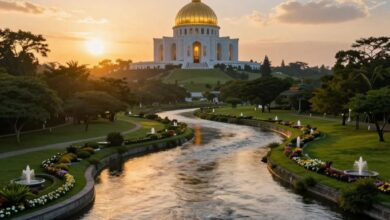
A World for Reflection in the Alleyways
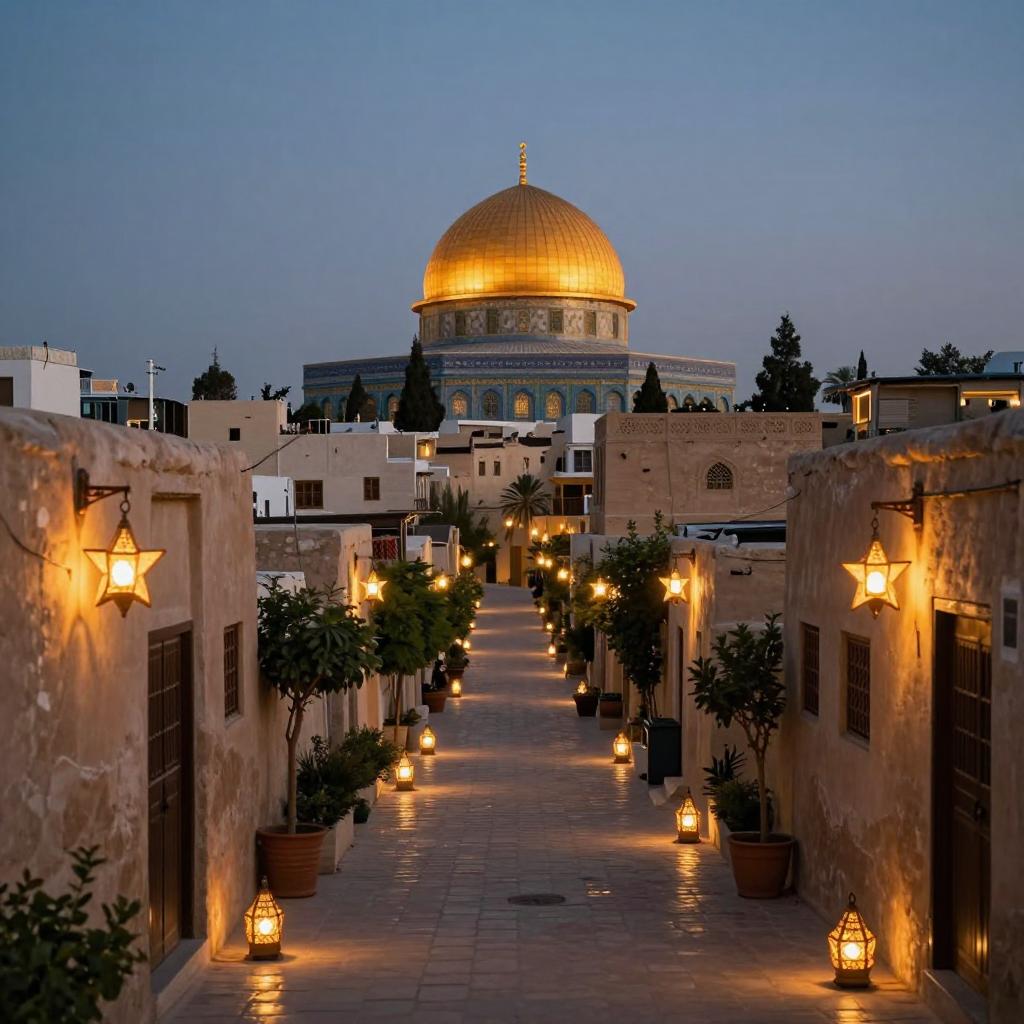
Every day, we pass through the alleyways of our neighborhoods. Homes, shops, trees, and familiar faces unfold a picture of daily life before our eyes. But sometimes, in these simple passages, a vast world takes shape in our minds—the world of which Bahá’u’lláh spoke; a world in which all of humanity are like the members of one body, and differences of color and race, like patterns on a beautiful carpet, add to the perfection of unity.
Yet, does the world we dream of not begin right here, in these very alleyways? Is the unity we envision on a global scale also felt in our own neighborhood? This article is an invitation to reflect on these questions and to explore the connection between grand ideals and our everyday lives.
Global Unity and Local Life: Two Sides of the Same Coin
The Bahá’í Faith presents the unity of humankind as one of its fundamental principles. Bahá’u’lláh, in the Kitáb-i-Aqdas, describes the world as one country and all humanity as its citizens. This vision opens a vast and hopeful horizon before us. He states: “The earth is but one country, and mankind its citizens.”
Yet at the same time, the Bahá’í Administrative Order’s emphasis on establishing Spiritual Assemblies in every city and village, and its invitation to active participation in local life, indicates that this global unity cannot be achieved without solid foundations in the alleyways of our daily existence.
As Shoghi Effendi, the Guardian, writes in The World Order of Bahá’u’lláh: “The unity of the human race is not merely a lofty ideal, but a gradual and practical process that takes shape within local communities and through the daily interactions of human beings.” This statement invites us to reflect on our own role in this process.
Is Global Unity Felt in Our Neighborhood?
This is a question many of us may have asked ourselves. Sometimes, amidst a multitude of daily activities, we wonder: Is the global unity spoken of in the messages of the Universal House of Justice and the Holy Books flowing through our own street? Do our neighbors, regardless of any differences, accept us as brothers and sisters?
Some may feel that global unity is a distant and unattainable ideal, and that what they see in their neighborhood is still entangled in differences and sometimes small conflicts. However, it is important to remember that unity is not a destination; it is a path. And this path begins with small steps that each of us takes in our daily lives.
Challenges on the Path of Connecting Neighborhood and World
If we are honest, sometimes we too feel a gap between global ideals and local realities. Some of the challenges that many of us may have encountered include:
-
Daily preoccupations that deprive us of the time to reflect on grand ideals.
-
Lack of sufficient familiarity with the practical dimensions of the teachings on unity in everyday life.
-
Weak local communication and a shortage of friendly, intimate gatherings in neighborhoods.
-
Fear of being judged when expressing a desire to engage with neighbors in new ways.
-
Lack of practical role models of a life that embodies global unity.
These points are not meant to imply that the Bahá’í teachings are ineffective, but rather to highlight opportunities for improvement and growth. The Bahá’í Administrative Order, with its emphasis on consultation and collective participation, provides a suitable context for addressing these challenges.
How Can We Build a Bridge Between Neighborhood and World?
To transform global unity from a distant ideal into a tangible reality in our own neighborhoods, we can take the following practical steps:
1. Starting with ourselves and our families: The first step toward unity is practicing it within the family and then extending it to neighbors.
2. Organizing local gatherings: By forming friendly and intimate meetings in the neighborhood, we can create opportunities for dialogue and consultation.
3. Paying attention to neighbors’ needs: Sometimes, a small act of help can build a bridge that brings distant hearts closer.
4. Discussing global ideals: By sharing the unifying teachings of the Bahá’í Faith with others, we can light the flame of hope in more hearts.
5. Forming solidarity groups: Creating local groups for social activities and service can be a tangible manifestation of unity.
6. Studying and reflecting on the teachings: The more we familiarize ourselves with the practical dimensions of the Bahá’í teachings, the better we can embody them in our lives.
A Reflection for Today
Let us ask ourselves: What role do I play in my neighborhood in realizing global unity? Have I ever paid attention to my neighbor’s needs? Have I participated in local gatherings and added my voice to the conversation? Have I utilized local capacities to expand solidarity?
Today is an opportunity to take a fresh look at the alleyways of our neighborhood. Perhaps these very alleyways are the beginning of the world we dream of.
A Message of Hope
And in closing, let us know that every small step in our neighborhood is a contribution to the realization of global unity. Bahá’u’lláh envisioned a world that begins from the heart of neighborhoods. As ‘Abdu’l-Bahá stated in His Will and Testament: “If one individual kindles a light in their heart, that light will reach thousands.”
May each of us be a lamp in the alleyways of our neighborhood and build the world we dream of, starting right here.
Statement of Transparency:
This article represents the views of the author and does not necessarily reflect the official position of any Bahá’í institution. Our aim is to create a space for reflection and collective dialogue.
Frequently Asked Questions (FAQ)
1. Is global unity an unattainable ideal?
Global unity is a gradual process that begins with small steps in neighborhoods and communities. As Shoghi Effendi emphasized, this process takes shape through the daily interactions of human beings and, with collective effort, gradually comes to fruition.
2. How can I contribute to global unity in my neighborhood?
By starting a simple conversation, paying attention to neighbors’ needs, participating in local gatherings, and forming solidarity groups, you can play an effective role. Every small step is a significant contribution to this path.
3. Does global unity mean the homogenization of cultures?
No, global unity means unity in diversity. The Bahá’í Faith considers the preservation of diverse cultures and identities alongside solidarity and empathy as one of its principles.
Final Summary:
Bahá’í global unity begins in our neighborhoods. With small steps in daily life, we can transform grand ideals into reality and build a world full of solidarity and empathy