Along the Gentle Flow of a River
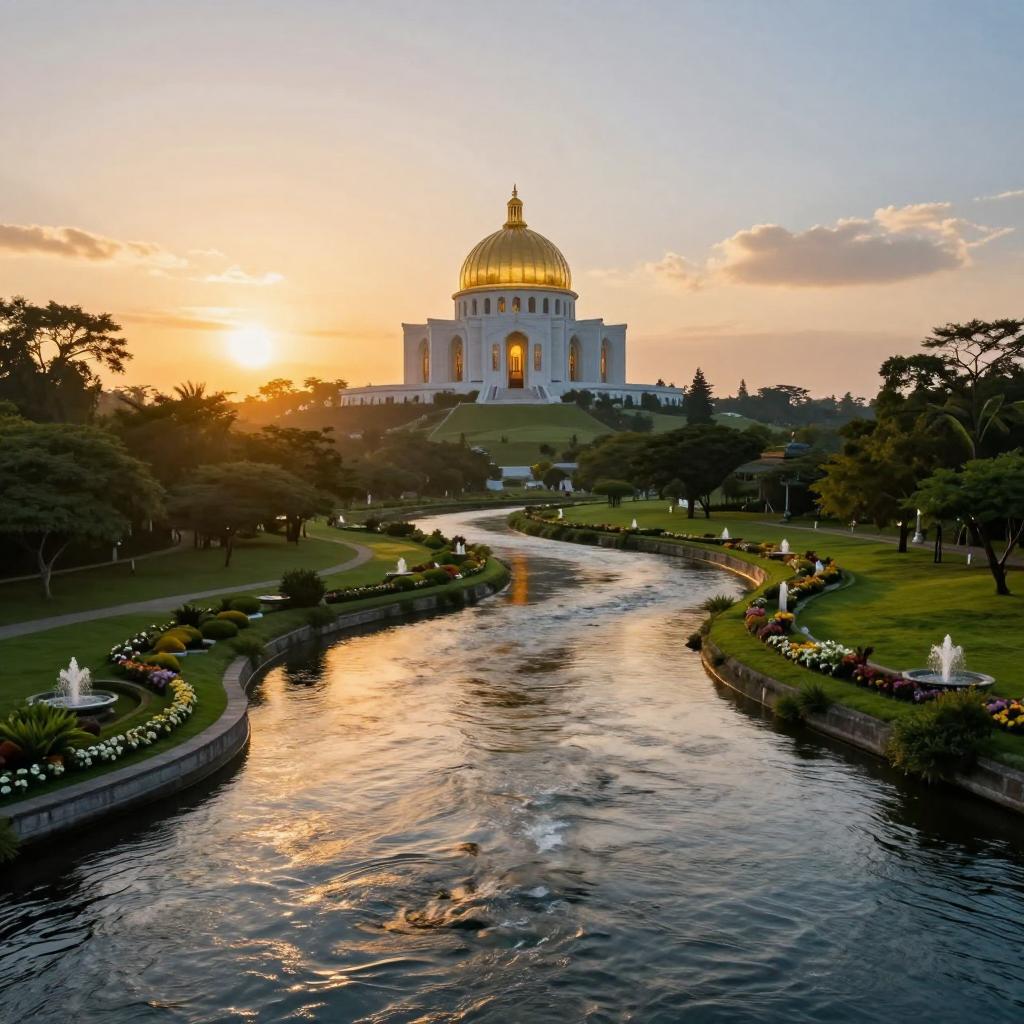
Rivers have long been symbols of movement, life, and dynamism. They flow with calmness but steadfastness, springing from the heart of mountains, joining the seas along their course, and in doing so, nourishing many lands. The Bahá’í Administrative Order is likewise like a river that originates from a pure spring and, over more than a century, has flowed with a gentle but steady motion along the path of realizing Bahá’u’lláh’s vision.
But has this movement always been at a uniform pace? Has this river sometimes flowed so gently that we have hardly noticed its current? And if so, does this gentleness hold wisdom, or does it call for renewed momentum? This article is an invitation to reflect on the evolution of the Bahá’í Administrative Order and to explore the question that has always lingered in the hearts of believers: How can we, while preserving tranquillity, also maintain dynamism and progress within this system?
The Bahá’í Administrative Order: A Divine and Democratic Structure
The Bahá’í Administrative Order is one of the most remarkable achievements of this Faith. Rooted in sacred texts, it is at the same time entirely democratic and participatory. Bahá’u’lláh, in the Kitáb-i-Aqdas, laid the foundation for this system, stating: “The Lord hath ordained that in every city a House of Justice be established…”
This “House of Justice,” known today as the Local Spiritual Assembly, is a body of nine members elected by all adult believers in that locality. But what distinguishes this system is its dynamism and flexibility. The Bahá’í Administrative Order is not a rigid, static structure, but a living, evolving entity that responds to new needs over time.
Shoghi Effendi, the Guardian of the Faith, in The World Order of Bahá’u’lláh, describes this dynamism as follows: “The Bahá’í Administrative Order is not a rigid and inflexible scheme, but an institution that, with the evolution of society, also evolves itself.” This statement reveals the depth and breadth of a system that, while steadfast, possesses the necessary flexibility to address new challenges.
A River Flowing Gently
If we liken the Bahá’í Administrative Order to a river, we must acknowledge that this river sometimes flows so gently that we can barely perceive its motion. This calmness is itself a sign of stability and steadfastness. But does this calmness sometimes turn into stillness? Does this river sometimes encounter obstacles along its path that slow its pace?
Some may feel that the Bahá’í Administrative Order, in certain areas, progresses more slowly than expected. This feeling arises not from dissatisfaction, but from love for progress and a longing for a more vibrant community. However, we must bear in mind that the movement of a system differs from the movement of an individual. A system, by its collective and consultative nature, requires more time for decision-making and implementation. This apparent slowness is, in fact, an opportunity for deeper reflection and broader consultation.
Challenges on the Path of Dynamism and Evolution
If we are honest, we sometimes encounter challenges on the path of the system’s evolution—challenges that many of us may have experienced. Some of these challenges include:
-
Slow pace of change in some areas, which may cause dissatisfaction among believers.
-
Insufficient familiarity among some believers with the dynamic aspects of the Administrative Order, leading them to perceive it as rigid and unchangeable.
-
Fear of change, which sometimes hinders the acceptance of new developments.
-
Administrative pressures that leave Assemblies with little time to reflect on the evolutionary dimensions of the system.
-
Lack of human and financial resources for implementing new programmes.
These points are not meant to imply that the Administrative Order is ineffective, but rather to highlight opportunities for improvement and growth. The Bahá’í Administrative Order, with its emphasis on consultation and collective participation, provides a suitable context for addressing these challenges.
How Can We Contribute to the System’s Dynamism?
To ensure that the Bahá’í Administrative Order continues its path like a dynamic, flowing river, we can take the following practical steps:
1. Increase awareness: By carefully studying the texts and teachings related to the Administrative Order, we can better understand its dynamic and evolving dimensions.
2. Active participation: Participate in elections and local activities with knowledge and reflection, and assist the Administrative Order on its path of evolution.
3. Constructive consultation: In consultative meetings, share your perspectives to help Assemblies make better decisions.
4. Patience and forbearance: Remember that change in collective systems requires time and patience, and we should not expect immediate transformations.
5. Provide feedback: If you sense that improvement is needed somewhere, share it with the Assembly respectfully and with reasoned arguments.
6. Trust in the system: With trust in the Administrative Order and the divine confirmations that accompany it, accompany it on its evolutionary path.
A Reflection for Today
Let us ask ourselves: How familiar am I with the dynamism of the Bahá’í Administrative Order? Have I ever paid attention to its evolution throughout history? Do I accompany its progress with patience and forbearance, or do I expect immediate change?
Today is an opportunity to take a fresh look at the Administrative Order in which we participate. Perhaps this new perspective will help us, while preserving calmness, also maintain dynamism and progress within this system.
A Message of Hope
And in closing, let us know that the Bahá’í Administrative Order is on an evolutionary and divine path. Just as a river flows gently but steadfastly toward the sea, this system moves with calmness and wisdom toward its lofty goals. May we, too, with patience and insight, accompany this dynamic river along the path of realizing Bahá’u’lláh’s vision. As Shoghi Effendi affirms: “The Bahá’í Administrative Order will ultimately attain its final perfection and will illumine the world with the light of justice and unity.”
Statement of Transparency:
This article represents the views of the author and does not necessarily reflect the official position of any Bahá’í institution. Our aim is to create a space for reflection and collective dialogue.
Frequently Asked Questions (FAQ)
1. Can the Bahá’í Administrative Order be changed?
Yes, the Bahá’í Administrative Order, due to its dynamic and evolving nature, can be changed and improved. The Universal House of Justice, as the highest administrative body, has the authority to legislate on matters not explicitly addressed in the sacred texts, and enacts new laws according to the needs of the time.
2. Why do changes in the Administrative Order happen slowly?
Changes in the Administrative Order, due to its collective and consultative nature, require time and careful examination. This apparent slowness is, in fact, an opportunity for deeper reflection and broader consultation, so that decisions are made based on collective wisdom with minimal error.
3. How can I play a role in the evolution of the Administrative Order?
By actively participating in elections, attending consultative meetings, providing constructive feedback to Assemblies, and studying the teachings related to the Administrative Order, you can play an effective role in its evolution.
Final Summary:
The Bahá’í Administrative Order, like a dynamic and evolving river, flows along the path of realizing Bahá’u’lláh’s vision. With patience and insight, we can accompany this system and contribute to its dynamism and progress.