Chile: Spiritual Principles in Public Life
A summary of the material referenced concerning Chile on the website Bahai.org
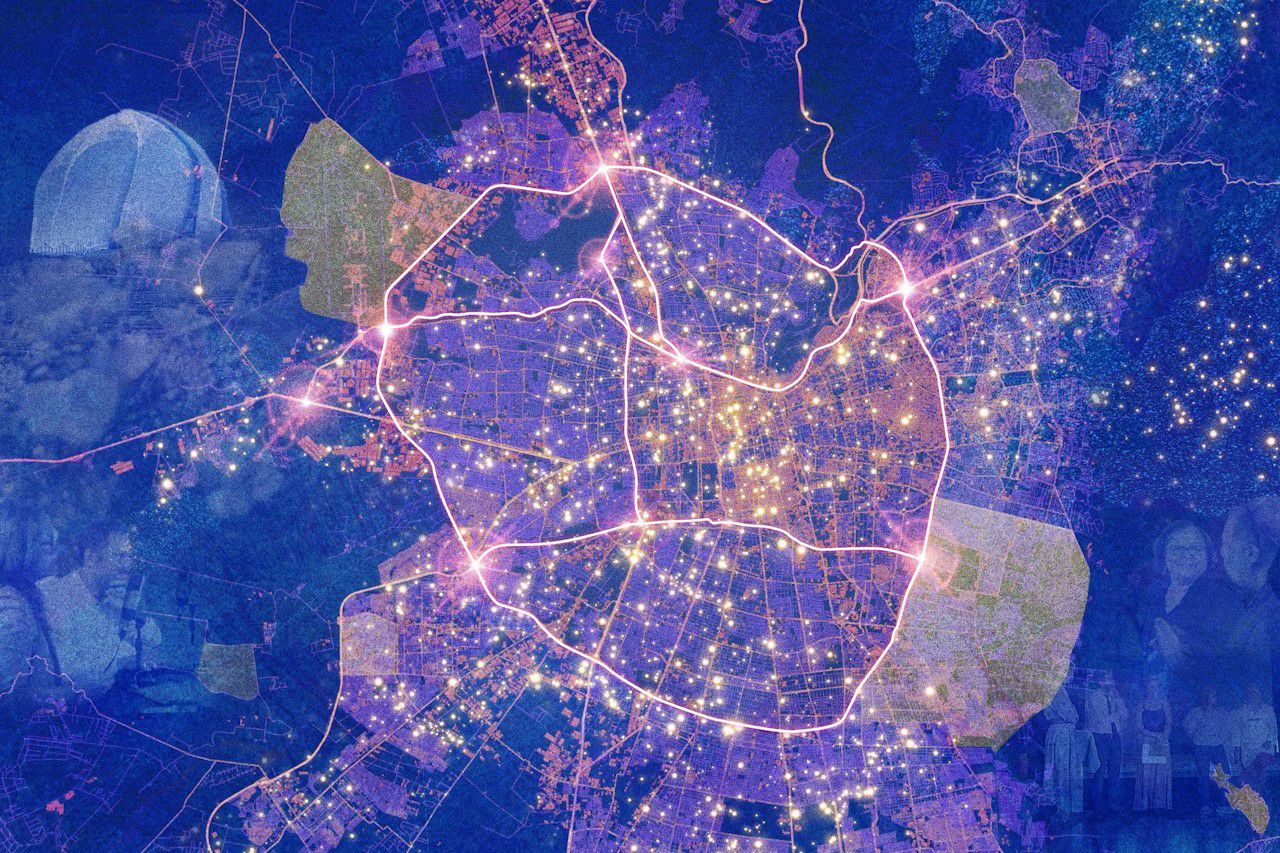
“Chile: Spiritual Principles in Public Life” describes a series of conversations in Chile exploring the role of spiritual principles in addressing social challenges. The initiative, led by the Bahá’í Office of External Affairs in Chile, brought together social activists, academics, government representatives, civil society members, a family court judge, a sociologist working with youth in the justice system, and a municipal official.
The central idea of the article is that many social problems cannot be addressed only through technical solutions, policies, or institutional reforms. The participants identified a missing dimension in social transformation: spirituality.
However, the article defines spirituality not as a private religious practice or a withdrawal from society, but as an active force expressed through daily life. According to the participants, spirituality appears in the quality of human relationships, commitment to truth and justice, the ability to work collectively, and decisions that affect the lives of others.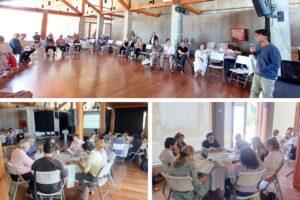
The discussions began following the publication of a document on social transformation, which presented a vision based on two concepts:
The oneness of humanity.
The spiritual dimensions of human identity.
Rather than treating the publication as a one-time event, the Bahá’í Office continued the dialogue with participants, creating a space where individuals from different backgrounds could reflect together on social challenges.
A major theme of these gatherings was “unity in diversity.” Participants viewed this principle as a guide for listening, consultation, and collective action. They emphasized that differences among people should not prevent cooperation for the common good.
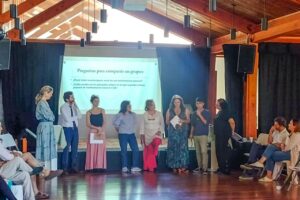 Another major theme was the relationship between individual transformation and social transformation. The article argues that qualities such as honesty, justice, and solidarity begin within individuals but achieve their full meaning when expressed through collective action.
Participants described the gatherings as spaces of friendship, trust, reflection, and hope. Pamela Acuña, from the Municipality of Peñalolén, described the process as “purposeful friendship,” where people engage in generous participation and shared learning.
Monica Jeldres, a family court judge, emphasized that spirituality should not remain an abstract concept. Instead, it should lead to concrete actions and policies that strengthen communities. She argued that true spirituality is not an escape from reality but a force that helps transform suffering into constructive social action.
The article concludes by presenting spirituality as a foundation for creating more humane societies—one where people rebuild connections, serve others, and work together toward social well-being.
https://news.bahai.org/story/1867/chile-spiritual-principles-in-public-life
A Reflection on “Chile: Spiritual Principles in Public Life”
The article begins with the idea that addressing today’s social challenges requires more than effective policies, institutional reforms, or technical expertise. It suggests that societies also need a deeper source of renewal—what it describes as spirituality. This spirituality is presented not as a private belief or an abstract ideal, but as something expressed through justice, truthfulness, service, meaningful relationships, and a shared commitment to the common good.
The article offers an inspiring vision. At the same time, it naturally invites another reflection—one that arises from the article’s own central premise.
Dialogue: Beginning Within the Community
The article highlights friendship, dialogue, and collective learning as essential conditions for social transformation. Likewise, consultation occupies a central place within the Bahá’í administrative order and is regarded as one of its most fundamental principles.
At the same time, Bahá’í administrative practice also emphasizes that once consultation has concluded and a decision has been made, unity should be preserved and public contention avoided. This principle has undoubtedly contributed to the cohesion of the Bahá’í community.
Yet the article also prompts a thoughtful question: how can a community continue to strengthen a culture in which unity and openness coexist—where members feel that their questions, experiences, and concerns are genuinely heard, even while preserving the spirit of unity? The deeper this balance is experienced, the more fully the article’s vision of dialogue becomes a lived reality.
Unity in Diversity as a Daily Experience
The article presents unity in diversity as a guiding principle for social transformation.
Perhaps one of the fullest expressions of this principle is found not only in society at large, but also in the everyday life of the community itself—where different experiences, perspectives, and concerns are received not as obstacles to unity, but as opportunities for deeper understanding, richer consultation, and mutual learning.
When every individual feels that his or her voice contributes meaningfully to the search for truth, unity in diversity becomes more than an ideal; it becomes a lived experience.
Justice as a Lived Experience
Justice is presented throughout the article as one of the clearest expressions of spirituality.
In community life, however, justice is experienced not only through the outcomes of decisions but also through the way decisions are reached. People naturally seek to know that their perspectives have been listened to carefully, that their concerns have been considered respectfully, and that their dignity has been upheld throughout the process.
The more deeply this experience is reflected in the internal life of a community, the more visible the connection between spirituality and justice becomes.
Spirituality Is Measured in Relationships
Perhaps the article’s most compelling insight is that spirituality is not primarily something to be discussed—it is something to be lived.
If this is true, then the first place where spirituality becomes visible is within the life of the very community that seeks to share these principles with the wider world.
The quality of relationships, the way differences are navigated, the spirit of consultation, the degree of mutual trust, and the respect shown for every individual all become expressions of the spirituality the article describes.
A Closing Reflection
One of the article’s greatest strengths is that it measures social transformation not merely by successful initiatives, but by the quality of human relationships.
If so, this same measure naturally applies first to the community that offers this vision to society.
The more deeply justice, consultation, trust, human dignity, and a spirit of learning are experienced within the community itself, the more compelling its contribution to public discourse becomes. In such circumstances, its message is not only heard—it is seen.
Perhaps the most powerful invitation to spirituality lies not in speaking about it, but in living it. Before the world listens to the words of a community, it looks to the quality of the relationships that community cultivates within itself. When message and lived experience are in harmony, life itself becomes the most convincing testimony to the truth of that message
